
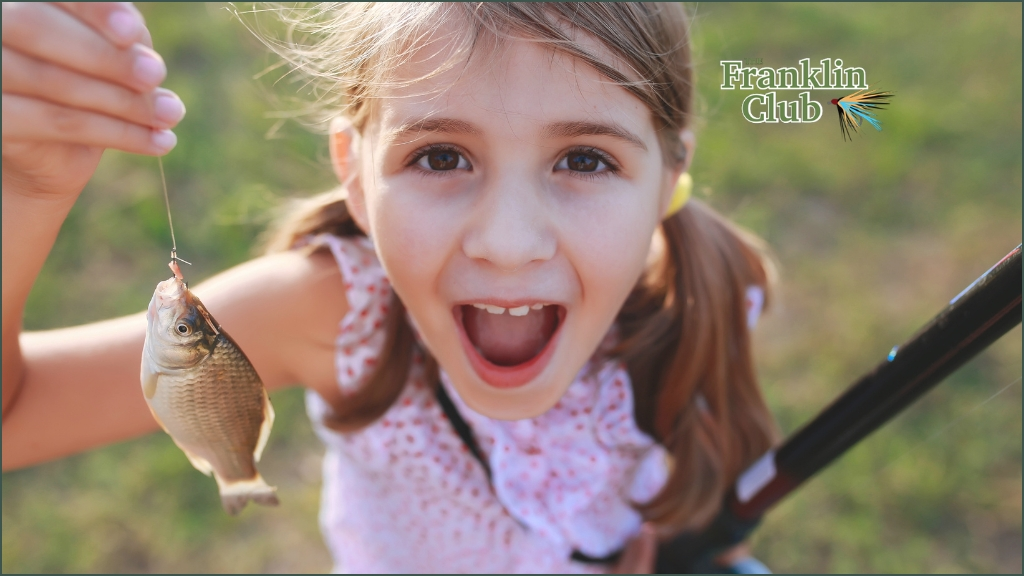
A cool breeze on a summer morning. The gentle lapping of water against the shoreline or boat. The sudden jolt of a fish on the line, a vibration that travels from the rod, up my arm, and straight to my heart. That feeling—the rush of adrenaline and pure, unadulterated joy—is a memory I’ve carried my whole life. Fishing isn’t just a hobby for me; it’s a part of who I am, a source of peace, patience, and a deep connection to the natural world. Now, my greatest excitement comes from seeing that same spark ignite in a child’s eyes.
In a world full of screens and busy schedules, the opportunity to pass on this gift to a child feels more important than ever. Creating those memories starts with choosing the right environment. That’s why I believe a destination like The Franklin Club is ideal for families. With a membership, your immediate family is included and encouraged to share in the experience. It’s a place where kids can feel welcome, supported, and excited to explore, with diverse activities and a genuine commitment to creating a great family experience.
If you’re looking to introduce a young person to the sport, here are my ten most important tips for a fun and meaningful experience.
1. Keep it Fun, Not Frustrating
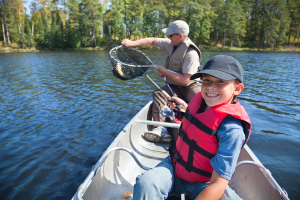 The first and most important rule of family fishing is to make it enjoyable. If their first experience is long, tiring, or filled with too many “dont’s,” you risk turning them off before they even start. Keep the first trips short; an hour or two is plenty for younger kids.
Choose a calm, easy-to-access fishing spot where they can cast without worrying about tangles in trees. Remember, they’re there to have fun, not to master every skill in one day. Celebrate the little moments and small wins: a well-placed cast, a fish follow, baiting a hook, anything they can learn themselves. Sometimes, success is simply spending uninterrupted time together.
2. Use the Right Gear for Young Hands
 It’s important that the gear matches your child’s size and abilities. Heavy rods and complicated reels can frustrate beginners. A lightweight spinning combo or a youth-sized fly rod is ideal for their first outings.
Keep tackle simple: a few hooks, barbless where possible, some easy-to-use bait or flies, and maybe a bright bobber or strike indicator so they can easily see when something’s biting. The right gear builds confidence. When kids feel comfortable casting and reeling, they’ll be more likely to stick with it. At The Franklin Club, expert-led lessons and hands-on guidance help kids light up after just a few minutes of instruction.
3. Teach Patience & Observation
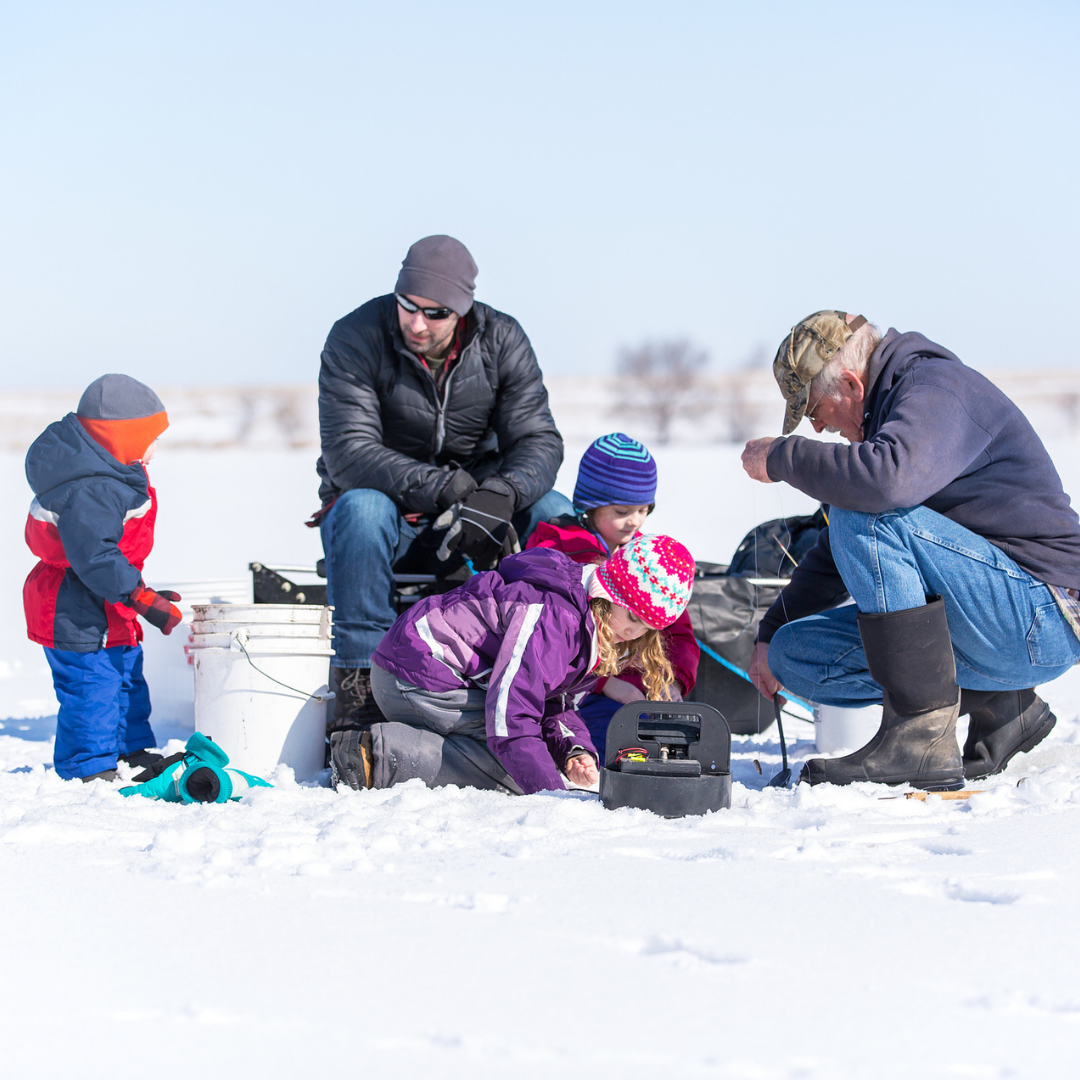
Patience is one of the greatest lessons fishing teaches, but it’s important to build it in a way that keeps kids engaged. Expecting them to stand still for long stretches will only lead to fidgeting and boredom.
Instead, turn waiting time into an opportunity for discovery. Between casts, go on mini-adventures like:
- Look for frogs or turtles along the shoreline.
- See how many types of birds you can spot.
- Teach them how to skip stones or look for interesting rocks.
- Scan the grounds and shorelines for any interesting items, animal tracks or insects
- Keep them fed, pack a lunch and a ton of snacks
- Bring friends, family, pets…
The Franklin Club, with its 200 acres of water, forest, and trails, offers endless opportunities to blend fishing with exploration. A child might start the day learning to cast and end it discovering deer tracks or finding a feather on the trail.
4. Celebrate Every Catch
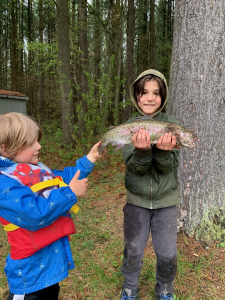 For kids, there’s no such thing as a “small” fish. Whether it’s a tiny sunfish, a scrappy perch, or their first rainbow trout, every catch is a victory worth celebrating.
Make a big deal of it; cheer, snap a photo, and let them retell the story to anyone who will listen. That pride fuels their desire to try again and again. The Franklin Club fosters this encouragement through its popular Kids’ Fishing Derby and other family events where every child gets their moment in the spotlight.
5. Make it a Shared Experience
 Fishing is more than a solitary pastime; it’s an opportunity to connect. Invite siblings, cousins, or grandparents to join in. Plan a picnic on the shoreline, share family fishing stories, and create a tradition that kids will associate with joy and togetherness.
At The Franklin Club, your immediate family is included with a membership, making it easy to turn a day of fishing into a full day of fun. Kids who see fishing as part of a bigger family tradition are more likely to keep coming back.
6. Embrace the “Yuck” Factor
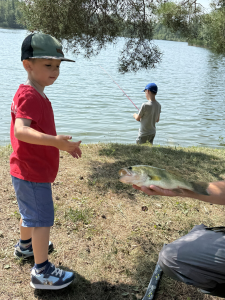 A great way to get kids engaged is to let them embrace the messy, hands-on parts of the experience. The “ick” factor is a powerful tool for a child’s curiosity, and using live bait like worms or any bug is a guaranteed way to tap into it. This is more than just a fish magnet; it’s a sensory rite of passage that connects them directly to the entire process.
By allowing them to bait the hook themselves, they go from being a spectator to an active participant. It’s a key step in building their confidence and sense of ownership.
Here’s why it works:
- A Sensory Experience: Let them feel the wriggling worm and the cool, damp earth it came from. The mud on their hands and the subtle “yuck” factor is all part of the fun. Once they make a catch, let them feel the rough texture of the fish’s scales and the surprising prickle of its fins. This tactile interaction builds a deeper connection to nature.
- A Rite of Passage: Conquering the “yuck” factor, from baiting the hook to holding the fish, gives them a badge of honour. It’s a moment of courage they’ll be proud to tell stories about for years to come.
- Directly Tied to Success: When a bobber finally dips under the water, the moment of the bite is all the more exciting because they know their handiwork was the key to their success.
This makes the moment they get a bite and handle the fish even more exciting because they feel they are truly part of the action.
7. Let Them Take Ownership
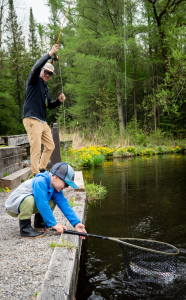 The best thing you can do is put your own rod down and let them have their own space. Your job is to be the guide, the mentor, the cheerleader. Let them choose their own lure (even if it’s a terrible choice), let them try to untangle their own line, and let them bait their own hook (with supervision, of course). The frustration is part of the learning process, and the feeling of accomplishment when they do it themselves is what builds confidence. The fastest way to kill a child’s interest is to do everything for them. The hero of the story is them, not you.
8. Start with the Right Fish
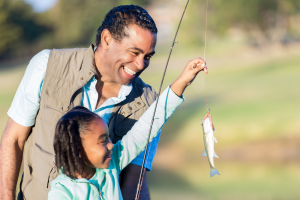 The goal is to get a bite, so targeting cooperative fish is key. Panfish like bluegill or sunfish are perfect for beginners. They’re abundant, aggressive, and a blast to catch on light tackle. A bobber dancing on the water and then disappearing is the most exciting thing in the world to a kid. It’s a visual cue, a clear signal that something is happening. When they feel that first tug and reel in a feisty little fish, that moment of triumph is what hooks them for life.
9. Tune into Nature’s Channel
Teach kids that fishing isn’t just about the thrill of the catch; it’s also about the quiet moments in between. Encourage them to be fully present and use all of their senses. Ask them, “What sounds can you hear?” The birds singing, the wind in the trees, the ripple of water. “What do you see?” The colours of the sunset, the patterns in the clouds, the dragonflies darting by. “What do you feel?” The warmth of the sun, the cool breeze on their skin. This teaches them to be a mindful observer of the natural world, turning a simple fishing trip into a lesson in appreciating the beauty and peace of the outdoors.

10. Teach Respect for Nature
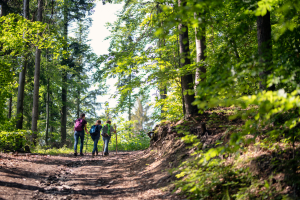 Fishing isn’t just about catching fish; it’s a front-row seat to the natural world. Teach them to be observers, to slow down and notice the fascinating details around them. The water is a window into a complex ecosystem, and a fishing trip is the perfect classroom. Most importantly, teach them to handle a fish gently, and if you plan on keeping one, explain why. Talk about the role fish play in the ecosystem, and how we have a responsibility to protect it. Teach them to pick up their trash and maybe even a little bit of someone else’s.
The Best Catch Is Time Together
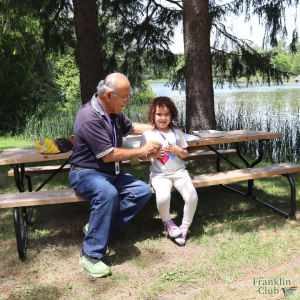
Fishing has always been more than a pastime. It is a chance to slow down, tune in, and spend uninterrupted time with the people who matter most. Teaching a child to fish is not just about technique. It is about patience, confidence, and the wonder of discovery. It is about muddy boots, tangled lines, shared stories, and that first unforgettable catch.
At The Franklin Club, those moments are part of everyday life. For over 100 years, the Club has been a place where children have grown up learning the rhythms of nature, cheered on by parents, grandparents, and family friends who brought them here for something more than just a day outdoors. Many of our adult and senior members still look back on those early visits with deep gratitude, knowing they were living in the good old days before they ever left them.
That tradition continues. A single membership includes your immediate family, making it easy to share the experience. The Franklin Club offers more than private waters—it provides the space, support, and sense of belonging to create memories that last a lifetime. Whether it is a child’s first cast, a scavenger hunt through the forest, or a movie under the stars, every visit becomes part of your family’s story.
0 Comments